.jpg)
I tried to post the video of Jeffrey Sachs and Jon Stewart on the March 18, 2008 "Daily Show" but was unable to do so. I first saw it at Episcopalians for Global Reconciliation, where you can watch the video, too. But below is a review from The Economist of Jeffrey Sachs' new book Common Wealth: Economics for a Crowded Planet. More reviews of the book are here.
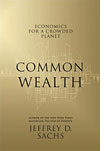 Sachs appeal
March 27, 2008
"Nor is Mr Sachs lacking in ambition. His previous book was called “The End of Poverty”. Now he has moved on to tackle a wide range of other challenges facing the planet, from climate change through to disease eradication. His goals include stabilisation of the world's population, a move to sustainable energy use and “a new approach to global problem solving”.
"If the above makes Mr Sachs sound like an impractical dreamer, that would be rather unfair. This densely written book is packed with statistics and carefully worded arguments. Nor is the author a left-wing ideologue. He recognises that the private sector and market-based solutions have a vital role to play. He cites, for example, the success achieved by public-private sector initiatives in tackling acid rain and chlorofluorocarbon emissions.
"On population control, he makes the good (if counter-intuitive) point that improvements in infant mortality are an important part of the solution. When families know that more of their children will survive into adulthood, they have fewer kids. Reduced fertility in turn leads to improved living standards and, eventually, by cutting the numbers of idle and impoverished young men, reduces the potential for conflict and terrorism. As he remarks, this makes the Bush administration's negative attitude towards family planning even more difficult to understand.
"Courageously, Mr Sachs does not ignore costs. He reckons the bill for tackling the issues he raises will come to a total of 2.4% of rich-world economic output (about one year's growth). That seems a reasonable price to pay, provided of course that you are not paying it. Indeed, the book's rather jaunty tone plays down some of the hard choices that will need to be made if the world's problems are to be tackled. On climate change, Mr Sachs is very enthusiastic about carbon capture and sequestration, a technology that is unproven on a large scale and will be difficult to adapt to existing power plants. One must also doubt whether all the world's cars could really be converted into gas-electric hybrids by 2026, as he suggests.
"This brings us to the main problem with the book: it is unremittingly worthy and expects other people to be so too. When the author writes that a post-Kyoto agreement on climate change “should include all actors, not just the rich ones, and not just the rich ones who are willing to reduce emissions”, one wonders how many real people would vote for that. Similarly, he says blithely that “in order to combat poverty and inequality, it is also essential to combat racism and intolerance.”
"If everyone in the world were as reasonable as Mr Sachs, his solutions would be easy to implement. However, if everyone were that reasonable, there would not be so many problems in the first place."

2 comments:
SOunds like the interviewer is as impressed with Mr. Sachs as a person as with his theories.
I need to read these books! Thanks!
Sounds interesting, Jan. We need visionaries like Sachs.
I guess the cynic in me says that the people who will read this book are the "reasonable people" mentioned in the review. But still, the effort must be made.
Post a Comment